How to Source Custom Colored Contact Lenses in 2026?

Time:2026-10-10 Author:Liam
0%

Sourcing a Custom Colored Contact Lens in 2026 requires more than selecting an attractive shade. It demands clinical awareness, supplier verification, and careful control of manufacturing details. A lens may look beautiful in a sample photograph, yet feel dry, shift during blinking, or obscure vision when worn. Small differences matter.

Dr. Thomas L. Steinemann, an ophthalmologist and contact lens safety expert, has emphasized, “Contact lenses are medical devices, and they need to be fitted by an eye care professional.” This principle should guide every sourcing decision. Responsible buyers must confirm prescriptions, material specifications, base curves, diameter, oxygen permeability, and color stability. They should also request production samples before approving large quantities.

Reliable suppliers should provide traceable documentation, consistent batch records, and clear quality-control procedures. Their manufacturing site should demonstrate experience with pigment placement, edge finishing, sterilization, and packaging integrity. Compliance requirements differ by market, so buyers must verify applicable medical-device rules before placing orders. Marketing language alone is not enough.

The sourcing process can still involve uncertainty. A color that matches a digital image may appear warmer under studio lighting. A comfortable prototype may perform differently after extended wear testing. These are not minor disappointments; they are useful warnings. Document them, investigate them, and revise the specification.

This guide explains how to evaluate suppliers, compare materials, reduce avoidable risks, and build a dependable Custom Colored Contact Lens sourcing process for 2026. Safety should remain visible in every decision. That is the standard.
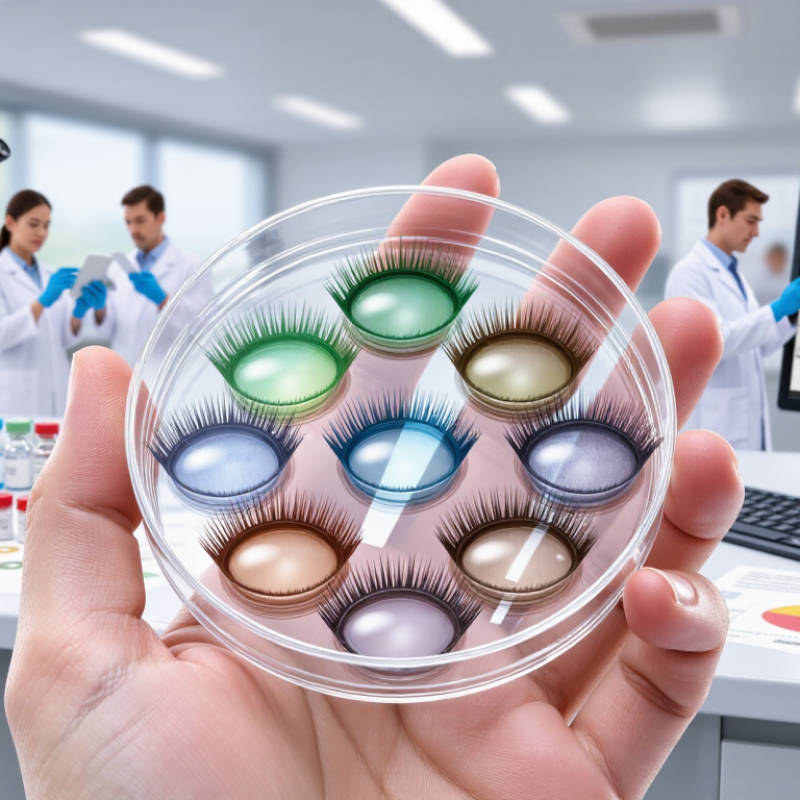
How to Source Custom Colored Contact Lenses in 2026?

Define Your Custom Colored Contact Lens Requirements

How to Source Custom Colored Contact Lenses in 2026?

Define Your Custom Colored Contact Lens Requirements

Custom sourcing starts with a written specification, not a color sample. Define prescription power, base curve, diameter, lens material, water content, replacement schedule, and tint coverage. Include a physical color reference under daylight and indoor lighting. A shade can look blue on screen but gray on the eye. Specify acceptable color variation, edge definition, opacity, packaging, minimum order quantity, and target delivery date. Small details prevent expensive revisions.

Market demand supports careful planning. Grand View Research reported that the global contact lens market reached about USD 18.4 billion in 2023, with projected growth through 2030. This figure covers all contact lenses, not only colored products, but it signals strong competition and rising quality expectations. Your supplier should provide manufacturing records, material specifications, batch traceability, and applicable quality certifications. Ask how samples are inspected.

Safety must shape every requirement. In the United States, the FDA classifies decorative lenses as medical devices requiring valid prescriptions. Rules differ across markets, so verify local registration and labeling before production. The CDC reported that 99% of surveyed contact lens wearers had practiced at least one risky behavior. That finding deserves attention. A beautiful lens is still unsuitable if its fit, oxygen performance, or care instructions are unclear. I would also request independent testing, although testing adds time and cost. A weakness remains: color approval alone cannot prove clinical safety.

Verify Safety, Prescription, and Regulatory Compliance

How to Source Custom Colored Contact Lenses in 2026?

Custom colored contact lenses should be sourced as medical devices, not fashion accessories. A valid prescription must confirm power, base curve, diameter, and wearing schedule. An eye-care professional should assess the fit before purchase. Eye color does not replace clinical measurements.

Ask the supplier for manufacturer details, lot numbers, expiration dates, sterility information, and complete material specifications. Request samples with readable packaging. Check whether the lenses are approved or registered in the destination market. Regulatory rules differ by country, so verify requirements with the local medical-device authority. A regulatory document should be traceable, current, and linked to the exact product.

Do not accept vague claims such as “one size fits all” or “risk-free.” Safe sourcing also includes sealed packaging, clear cleaning instructions, and a documented complaint process. Never share lenses or wear them overnight unless specifically instructed. Redness, pain, light sensitivity, or blurred vision requires immediate removal and professional evaluation. One detail is easy to miss: printed color patterns can affect comfort and vision. I would still request independent testing when documentation feels incomplete. A low price is not useful if the supplier cannot explain quality controls.

Find and Screen Qualified Lens Manufacturers

How to Source Custom Colored Contact Lenses in 2026?

Grand View Research estimated the global colored contact lens market at about USD 3.8 billion in 2023, with continued growth through 2030. Demand is rising, but supplier quality varies sharply. Start with manufacturers that can provide valid medical-device registrations, quality certificates, and export records for your target markets. ISO 13485 certification is useful, but it is not proof of every product’s safety.

Ask for ISO 18369-based specifications covering diameter, base curve, water content, oxygen permeability, and power accuracy. Request pigment composition and biocompatibility evidence under relevant ISO 10993 testing. A responsible factory should also show sterilization validation, packaging integrity tests, shelf-life data, and batch traceability. Do not accept only laboratory summaries. Review complete reports with sample numbers and testing dates.

Samples should represent production conditions. Request at least three batches, not one attractive prototype. Check color consistency under daylight and indoor lighting. Measure lens dimensions independently. Examine edge quality after hydration. Small differences matter. FDA guidance treats contact lenses as medical devices in the United States, while other markets impose their own registration and labeling rules. Verify prescription requirements before signing contracts. I have seen sourcing teams trust a polished sample too quickly; that shortcut can hide weak process control. Price still matters, but an unusually low quotation deserves a documented explanation. Ask how complaints, recalls, and damaged shipments are handled. If the answers stay vague, keep screening.

How to Source Custom Colored Contact Lenses in 2026? - Find and Screen Qualified Lens Manufacturers

Screening Dimension What to Verify Evidence to Request Practical 2026 Benchmark Warning Signs
Intended Market Confirm the destination countries before selecting the manufacturing route. Written regulatory-market assessment and product classification rationale. The manufacturer can explain separate requirements for each target market. One generic certificate is claimed to cover every country.
United States Compliance Colored and decorative contact lenses are regulated as medical devices and generally require a valid prescription. Device listing or authorization details, quality-system records, labeling samples, and prescription-use controls. No direct-to-consumer supply without prescription controls for the U.S. market. Claims that decorative lenses are only cosmetic products and need no prescription.
European Union Compliance Verify conformity with the applicable medical-device framework and current transition rules. Declaration of conformity, technical documentation summary, clinical evaluation information, and certificate from the appropriate conformity-assessment route. Documentation identifies the legal manufacturer, authorized representative where required, product class, and applicable conformity route. An outdated certificate, missing legal-manufacturer details, or unsupported conformity claims.
Quality Management System Assess control of design, production, complaints, nonconformities, and corrective actions. Current quality-management certificate, audit scope, certificate validity, and recent audit findings or corrective-action records. A documented medical-device quality system with an audit scope covering contact-lens manufacturing. Certificate scope covers only trading, packaging, or unrelated products.
Material and Oxygen Performance Confirm the lens material, water content, oxygen transmissibility, tint compatibility, and sterilization impact. Material specification, test reports, biocompatibility assessment, and finished-product performance data. Values are reported for the exact finished colored-lens design, not only for the uncolored base material. Only marketing terms such as “high oxygen” are provided without test methods or results.
Optical Parameters Check base curve, diameter, power range, cylinder options, axis options, center thickness, and cosmetic-zone dimensions. Approved product specification, tolerance chart, inspection method, and sample measurement report. Every custom parameter has a defined tolerance and acceptance criterion before production starts. The supplier cannot provide dimensional tolerances or changes specifications after sampling.
Color and Print Accuracy Evaluate color consistency, iris-pattern registration, opacity, pupil-zone alignment, and batch-to-batch variation. Color master standard, approved golden sample, inspection images, and batch color-tolerance method. A signed reference sample and objective inspection process are used for every production batch. Color approval is based only on uncalibrated screen images or verbal descriptions.
Customization Capability Determine whether the facility can handle custom tint formulas, artwork, prescription powers, and parameter combinations. Design feasibility review, sample-development workflow, engineering change procedure, and approved drawing. A written design-review step is completed before tooling or mass production. The supplier accepts every design without checking fit, optics, safety, or manufacturability.
Biocompatibility and Safety Confirm that pigments, coatings, inks, packaging materials, and residues are suitable for ocular contact. Biocompatibility evaluation, extractables or chemical characterization where applicable, sterility validation, and residual-limit data. Testing covers the final assembled and sterilized product rather than only individual raw materials. Pigment safety is supported only by a general raw-material certificate.
Sterilization and Packaging Review sterilization method, packaging integrity, shelf life, storage conditions, and transport protection. Sterilization validation, packaging validation, seal-integrity testing, accelerated-aging rationale, and stability data. Shelf life is supported by documented stability evidence for the final package configuration. Shelf life is printed without validation or is changed for each purchase order.
Minimum Order Quantity Separate development quantities, stock designs, and fully custom production quantities. Written quotation showing tooling, sampling, unit pricing, packaging, and re-order conditions. Indicative market practice: samples may be available in small quantities; custom production often starts from hundreds to several thousand lenses per design. Low headline pricing excludes tooling, testing, packaging, regulatory work, or color-development charges.
Development Timeline Map design approval, sample production, testing, regulatory review, and commercial production. Project schedule with dependencies, review gates, responsible parties, and change-control process. Indicative planning range: several weeks for simple sampling and several months for a new regulated product or major design change. A promise of immediate mass production without sample approval or verification testing.
Traceability Verify that raw materials, operators, equipment, batches, inspections, and shipments can be traced. Example batch record, lot-number structure, certificate of analysis, retention-sample policy, and recall procedure. Each shipment has a traceable lot number linked to production and release records. No lot-level records or no documented process for complaints and recalls.
Quality-Control Release Confirm final inspection of appearance, power, dimensions, packaging, sterility, and labeling. Finished-product inspection plan, acceptance criteria, release checklist, and sample certificate of analysis. Release decisions are documented before shipment and are based on pre-agreed specifications. Inspection is performed only after a customer complaint or only through visual checks.
Labeling and Instructions Check intended use, prescription requirements, warnings, wear schedule, cleaning instructions, storage, and disposal information. Market-specific label artwork, instructions for use, symbols review, and translation-control records. Labels are reviewed for every destination market before printing. The same label is used globally despite different legal and language requirements.
Supplier Audit Assess facility hygiene, production controls, testing equipment, document control, and worker training. Remote or on-site audit report, corrective-action plan, production photographs where permitted, and key-process records. A risk-based audit is completed before commercial approval and repeated according to supplier risk. The supplier refuses an audit or provides only showroom photographs.
Commercial Agreement Define ownership of artwork, tooling, specifications, quality claims, change notification, confidentiality, and recall costs. Signed quality agreement, supply agreement, approved specification, and change-control clause. No material, process, site, packaging, or specification change occurs without documented approval when required. Terms are limited to price and delivery, with no quality or regulatory responsibilities.

Note: Quantity and timeline figures are indicative planning benchmarks, not quotations or regulatory guarantees. Final requirements should be confirmed with the competent authority and a qualified regulatory professional in each target market.

Compare Samples, Customization Options, and Minimum Orders

How to Source Custom Colored Contact Lenses in 2026?

Sourcing custom colored contact lenses starts with controlled sample comparisons. Request identical prescriptions, diameters, and base curves across suppliers. Then compare color under daylight, indoor lighting, and smartphone photographs. Small differences matter. Check edge definition, pupil opening, comfort, movement, and printed color consistency. A beautiful sample may still feel unstable during wear. Ask for material details, manufacturing records, lot traceability, sterility information, and quality-control test results. Qualified eye-care professionals should review fit and safety before any commercial launch.

Customization can include opacity, limbal-ring thickness, gradient intensity, diameter, prescription power, packaging, and artwork. Some suppliers offer digital color matching, while others require physical reference samples. Provide a measured color target, not only a verbal description like “soft hazel.” Discuss acceptable color variation in writing. Also confirm whether custom artwork changes testing requirements or production timing. I have found that overly complex designs often create uneven results. That lesson still needs repeating.

Minimum orders vary with tooling, lens parameters, packaging, and the number of colors. Request separate quotes for sampling, pilot production, and full production. A supplier may accept a small sample run but require a larger order for customized molds. Ask about deposit terms, replacement policies, lead times, and unused inventory. Calculate the true cost per usable lens, including rejected samples and compliance testing. Keep every specification in an approved document. Verbal promises are easy to misunderstand. Ensure the supplier can meet the regulations of each intended market, and obtain professional legal and eye-care advice before distribution.

Finalize Pricing, Production, Quality Checks, and Shipping

How to Source Custom Colored Contact Lenses in 2026?

Finalize Pricing, Production, Quality Checks, and Shipping

Custom lens sourcing starts with a complete specification sheet. Include color references, diameter, base curve, prescription range, material, packaging, and annual volume. Request a tiered quotation, not one total figure. Separate tooling, sampling, unit cost, inspection, packaging, and freight charges. A low price may exclude essential checks. Review payment terms and replacement policies before approval.

Production should follow a documented sample process. Compare printed color references with physical lenses under daylight and indoor lighting. Confirm the approved sample before mass production. Check pigment placement, lens edges, surface moisture, power accuracy, and package sealing. Random inspection alone may miss repeated defects. A stronger plan combines supplier records, independent testing, and batch photographs. Keep approval documents organized.

Tips: Order a small pilot batch. Test comfort, color consistency, labeling, and delivery timing. Leave buffer time for corrections. Shipping requires more than a freight quote. Confirm sterile packaging, carton protection, tracking, insurance, and storage conditions. Ask how delays, damaged cartons, or temperature exposure are handled. Use realistic delivery dates. A rushed launch can create avoidable pressure. My own planning would allow more time for rechecking artwork and shipping documents; those details often cause delays. Verify every carton count before dispatch.

FAQS

What details should a custom colored contact lens specification include?

Define prescription power, base curve, diameter, material, water content, and replacement schedule. Include tint coverage, edge definition, opacity, packaging, order quantity, and delivery date. Small details prevent costly revisions.

How can I describe the desired lens color accurately?

Provide a physical color reference, not only a screen image. Check the shade under daylight and indoor lighting. Blue on screen may look gray on the eye. Specify acceptable color variation.

Should colored contact lenses be treated as medical devices?

Yes. They require prescription-based fitting and responsible sourcing. An eye-care professional should confirm power, base curve, diameter, and wearing schedule. Eye color does not replace clinical measurements.

What supplier documents should I request?

Request manufacturer details, lot numbers, expiration dates, and sterility information. Ask for complete material specifications and readable sample packaging. Quality certificates should be current and traceable. Vague documents are a warning.

How can I check regulatory compliance?

Verify registration, approval, labeling, and import requirements in the destination market. Rules differ between countries. Link each document to the exact product and production batch. This step may take longer than expected.

What safety information should accompany the lenses?

Packaging should be sealed and easy to read. Cleaning instructions must explain storage, replacement, and handling. A documented complaint process is also important. “Risk-free” is not a reliable claim.

What behaviors should lens wearers avoid?

Never share lenses with another person. Do not sleep in them unless a qualified professional specifically permits it. Remove lenses immediately after redness, pain, light sensitivity, or blurred vision. Seek professional evaluation promptly.

Can color approval prove that custom lenses are safe?

No. Color approval only confirms appearance. It cannot prove proper fit, oxygen performance, sterility, or clinical safety. Printed patterns may also affect comfort and vision. I would request independent testing when records seem incomplete.

Is the lowest supplier price usually the best choice?

Not necessarily. A low price explains very little. Compare testing, traceability, materials, packaging, and complaint handling. Independent testing adds time and cost, but it may reveal hidden weaknesses. Perfect color is not enough.

Conclusion

Sourcing a Custom Colored Contact Lens in 2026 requires a structured approach that balances appearance, comfort, safety, and production reliability. Begin by defining the lens requirements, including color, opacity, diameter, base curve, material, wearing schedule, packaging, and intended market. Next, verify that the design supports proper prescription handling and that all products, labeling, testing, and documentation meet the applicable medical-device and contact-lens regulations in each target region.

After establishing the specifications, identify qualified manufacturers with appropriate facilities, technical expertise, quality systems, and relevant certifications. Request samples to assess color accuracy, fit, comfort, print consistency, and packaging quality before comparing customization capabilities, minimum order quantities, lead times, and communication standards. Finally, negotiate pricing and payment terms, confirm production tolerances, define inspection procedures, and establish a clear process for handling defects or delays. Careful planning at every stage can help reduce risks, control costs, and create a dependable supply chain for customized colored lenses.

Liam

Liam

Liam is a dedicated marketing professional with a profound expertise in the industry, where he excels at highlighting the unique advantages of our core products. With a keen understanding of market trends and consumer needs, Liam frequently updates our company’s professional blog, providing......