Choosing contact lenses for vision correction is not only about comfort, moisture, or appearance. UV exposure also deserves attention, especially during beach walks, mountain trips, long drives, and outdoor work. A UV Blocking Contact Lens may help filter certain ultraviolet rays before they reach the cornea. However, its protection is limited. The lens does not cover the eyelids, conjunctiva, or surrounding skin.
Optometrist Dr. Gary Heiting has emphasized, “UV-blocking contact lenses are not a substitute for UV-blocking sunglasses.” That warning remains practical. A wide-brimmed hat and quality sunglasses can reduce light entering from above and around the frames. Your eyes need layered protection.
This guide presents seven practical tips for choosing a suitable UV Blocking Contact Lens. It considers UV classification, wearing comfort, oxygen transmission, replacement schedules, prescription accuracy, and professional fitting. Small details matter. A lens that feels dry by lunchtime may discourage consistent wear. A lens with UV filtering may still be unsuitable for extended outdoor exposure. Certification and product information deserve careful checking.
There is no perfect lens for everyone. That is easy to forget. Personal tear production, allergies, screen habits, and eye health can change the decision. An eye-care professional should assess these factors before recommending a product. Do not choose solely from packaging claims or online reviews. A clearer choice usually comes from comparing verified specifications with real daily needs. Even experienced wearers can overlook glare, wind, dust, or poor replacement habits. These seven tips aim to make that decision more informed, realistic, and safer.
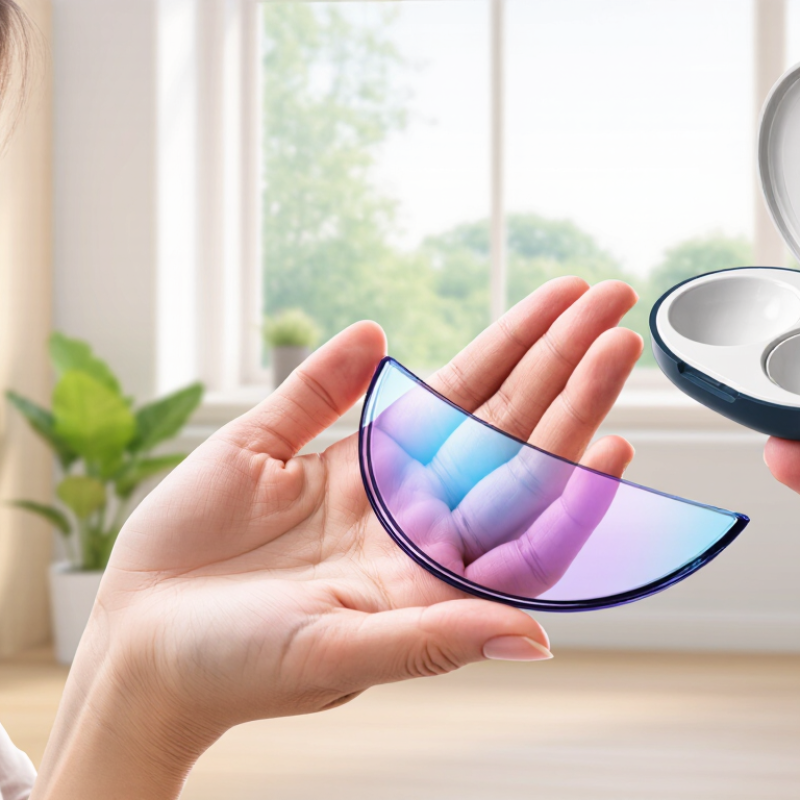
UV-blocking contact lenses contain a special absorbing material within the lens. This material reduces the amount of ultraviolet radiation reaching the cornea and parts of the eye. Some lenses filter both UVA and UVB rays, while others provide limited protection. Read the product specifications carefully. “UV protection” is not a complete description.
They are not sunglasses. Contact lenses cover the cornea, but they do not fully protect the eyelids, white part of the eye, or surrounding skin. A wide-brimmed hat and properly fitted sunglasses still matter outdoors. I once underestimated this gap because clear lenses feel protective. The limitation is easy to miss. Ask an eye-care professional about the lens’s certified UV transmission level, prescription accuracy, and replacement schedule.
Comfort can also reveal a poor choice. A lens that dries during a windy walk may encourage rubbing, even when its UV filter works well. Fit still matters. Choose lenses approved for your market and suitable for your wearing time, tear production, and daily environment. An eye examination can identify dryness, corneal problems, or sensitivity that a package label cannot. Do not sleep in lenses unless specifically directed by a qualified professional. If redness, pain, light sensitivity, or blurred vision appears, remove the lenses and seek prompt eye care. Even useful protection requires realistic expectations.
Check the Lens’s UV Protection Level and Certification
UV protection is not guaranteed by a darker tint. Check the lens package, prescribing information, and manufacturer’s technical documents. Look for measured UVA and UVB transmittance, not vague claims such as “sun protection.” ISO 18369-1:2017 commonly referenced Class 1 lenses transmit less than 1% of UVA and UVB. Class 2 lenses transmit less than 5% of UVA and less than 1% of UVB. These figures make comparison easier. They also expose missing information.
Certification matters. Confirm that the product follows an applicable optical standard and has approval from the relevant medical-device authority in your country. The U.S. Food and Drug Administration warns that UV-absorbing contact lenses do not replace sunglasses or other protective eyewear. That warning is easy to overlook. It should not be.
The World Health Organization’s Environmental Burden of Disease assessment has estimated that around 20% of cataract cases may relate to ultraviolet exposure. That figure supports caution, but it does not prove that every UV-blocking lens offers identical protection. Ask an eye-care professional to verify the lens class, fit, and wearing schedule. A poor fit can cause discomfort and blurred vision, even when UV data look impressive. I would also question online listings that show no certification details. A label alone is not evidence. The safest choice combines documented UV performance with properly fitted lenses and wraparound sunglasses.
| Tip | What to Check | Useful Technical Information | Evidence to Look For |
|---|---|---|---|
| 1. Check the UV protection level | Confirm that the lens documentation states UV transmittance or UV-blocking performance. | Lower UV transmittance means less ultraviolet radiation passes through the lens. Look for separate results for UV-A and UV-B where available. | A product specification sheet, package insert, or verified technical label with measured UV performance. |
| 2. Check the wavelength range | Make sure the stated protection covers the relevant ultraviolet bands. | UV-B is commonly defined as approximately 280–315 nm, while UV-A is approximately 315–380 nm. Test reports should identify the wavelength range used. | A spectral-transmittance chart or test result covering both UV-A and UV-B ranges. |
| 3. Look for recognized testing standards | Check whether the manufacturer identifies the laboratory method or applicable contact-lens performance standard. | UV performance should be measured by a documented spectrophotometric method under an applicable medical-device or contact-lens standard. | The exact standard or test method, test conditions, sample information, and issuing laboratory—not just a general “UV protection” claim. |
| 4. Verify regulatory authorization | Confirm that the contact lenses are legally authorized for sale in the country where they will be used. | Contact lenses are medical devices in many jurisdictions and generally require a prescription or professional fitting, even when they are non-corrective. | A regulator-recognized authorization or registration and a complete package insert with fitting, wearing, and safety instructions. |
| 5. Review the lens coverage | Understand that the lens covers only part of the eye and does not block light entering around the lens. | UV-blocking contact lenses do not protect the eyelids, conjunctiva, or surrounding skin, and they do not provide the broad side coverage of well-fitting sunglasses. | Use with UV-rated sunglasses and a brimmed hat, especially in strong sunlight, near water, snow, or sand. |
| 6. Check the wearing and replacement schedule | Choose a lens whose replacement schedule and care requirements fit your routine. | Daily disposable lenses are replaced after one day; reusable lenses must be cleaned, disinfected, stored, and replaced according to professional instructions. | Clear instructions for replacement, disinfection, storage, maximum wearing time, and what to do if discomfort occurs. |
| 7. Get a professional eye-care assessment | Have an eye-care professional assess fit, prescription, eye health, and suitability before use. | A poor fit or improper use can cause irritation, corneal damage, infection, or reduced vision, regardless of the lens’s UV performance. | A valid prescription, fitting evaluation, follow-up advice, and instructions to remove the lenses and seek care if pain, redness, light sensitivity, or blurred vision develops. |
Important: UV-blocking contact lenses are not a substitute for UV-rated sunglasses or other protective measures. UV claims should be supported by documented test results rather than packaging language alone.
Match the lens type to your prescription and wearing schedule. Daily disposable lenses suit occasional wear, travel, and outdoor activities. They reduce storage errors and keep each morning simple. Monthly lenses may suit regular wearers, but require strict cleaning and replacement habits. Do not choose a replacement cycle based only on comfort. Comfort can remain misleading while deposits build.
Your prescription also matters. Astigmatism usually needs a toric design, while presbyopia may require multifocal lenses. Ask an eye-care professional to check movement, centration, and dryness before choosing UV protection. In practice, a lens that shifts during a tennis serve offers poor practical coverage. Small details matter. The FDA describes UV-absorbing lenses in two classes. Class 1 lenses transmit no more than 1% UVB and 10% UVA, while Class 2 lenses allow slightly more UVA. Check the product documentation, not just the package wording.
UV protection is helpful, but it is not a complete shield. The World Health Organization estimates that up to 20% of cataract cases may relate to ultraviolet exposure. Wear wraparound sunglasses and a brimmed hat outdoors, especially near water or snow. I would also reconsider long “all-day” wear, even with a UV-blocking lens. Dryness, redness, or blurred vision means stopping and seeking professional advice. A perfect schedule on paper may still fail your eyes.
Comfort should guide every choice when selecting UV-blocking contact lenses. Start with a current eye examination and a prescription from a qualified eye-care professional. Ask whether the lens material suits your tear film and daily routine. A lens that feels fine for ten minutes may feel dry after six hours. Notice redness, burning, blurred vision, or a gritty sensation. Do not ignore them.
Proper fit matters as much as UV protection. The lens should move slightly with each blink, but it should not slide or fold. Your practitioner can check its position, diameter, and movement on the eye. Try lenses during normal activities, such as reading, commuting, or working near a screen. Bring honest feedback, even if the first trial seems acceptable. I sometimes underestimate small discomfort; that mistake can become a habit.
Protect eye health with clean, dry hands and fresh disinfecting solution. Follow the approved wearing schedule, and never sleep in lenses unless specifically directed. Replace the storage case regularly. UV-blocking contacts cover only part of the eye, so wear sunglasses and a brimmed hat outdoors. They do not replace complete sun protection. Stop wearing lenses if pain or sudden vision changes occur, and seek professional care promptly. A follow-up visit can reveal problems you cannot feel.
7 Tips for Choosing UV Blocking Contact Lenses
Use Safe Wearing Habits and Seek Professional Advice
UV-blocking contact lenses should begin with a professional eye examination. An optometrist can check your prescription, corneal health, tear film, and lens fit. Ask how much ultraviolet protection the lens provides. Coverage may not include the entire eye or surrounding skin. Sunglasses and a wide-brimmed hat still matter outdoors. Choose lenses made for your specific wearing schedule, especially if your eyes feel dry.
Clean hands are essential. Wash and dry them before touching the lenses. Never rinse lenses with tap water, swim while wearing them, or sleep in them unless specifically approved by a professional. Follow the replacement schedule, even when the lenses look clear. A practical mistake is stretching daily wear longer than advised. Small shortcuts can create bigger problems.
Listen to your eyes. Redness, pain, blurred vision, unusual light sensitivity, or discharge means removing the lenses promptly. Do not restart wearing them simply because symptoms improve. Seek advice from a licensed eye-care professional. Keep the lens case clean and replace it regularly. Store lenses only in the recommended solution, not homemade mixtures. Individual needs differ, and a lens that feels comfortable for a friend may fit you poorly. Professional follow-up is worthwhile, even when everything seems normal.
UV-blocking contact lenses are classified by the minimum percentage of ultraviolet radiation they absorb. Class 1 lenses block at least 90% of UVA and 99% of UVB, while Class 2 lenses block at least 70% of UVA and 95% of UVB.
UV-blocking contact lenses do not cover the entire eye or the surrounding skin, so they should not replace UV-protective sunglasses and a wide-brimmed hat. Choose lenses with guidance from an eye-care professional, follow the prescribed replacement schedule, wash and dry your hands before handling lenses, avoid sleeping or swimming in lenses unless specifically approved, and seek professional advice if you experience redness, pain, blurred vision, or light sensitivity.
Data basis: FDA performance classes for UV-absorbing contact lenses. Values shown are minimum UV-blocking percentages.
A qualified eye-care professional checks your prescription, corneal health, tear film, and lens fit. A current examination reduces avoidable problems.
The lens should move slightly with blinking, but it should not slide, fold, or feel loose. A practitioner can check its position, diameter, and movement.
Yes. A lens may feel fine for ten minutes, then become dry after six hours. Notice redness, burning, blurred vision, or a gritty feeling. I sometimes underestimate small discomfort.
Yes. Try reading, commuting, or working near a screen. Tell the practitioner what you notice, even during a short trial.
No. They cover only part of the eye. Wear sunglasses and a wide-brimmed hat outdoors. The lenses are not enough alone.
Wash and dry your hands before touching the lenses. Use fresh, recommended disinfecting solution. Never rinse lenses with tap water or homemade mixtures.
Do not sleep in them unless a professional specifically approves it. Remove them before swimming. Water exposure creates unnecessary risk.
Remove them promptly for pain, sudden blurred vision, redness, unusual light sensitivity, or discharge. Seek professional advice, even if symptoms improve. A follow-up visit may find problems you cannot feel.
Choosing a UV Blocking Contact Lens can help reduce the amount of ultraviolet radiation reaching the eyes, although it should not replace sunglasses or other forms of sun protection. When selecting one, check the lens’s stated UV protection level, supporting certification, and whether it meets recognized safety standards. Consider whether you need daily, reusable, or specialized lenses, and make sure the design matches your prescription, vision needs, and wearing schedule.
Comfort and eye health are equally important. A properly fitted lens should feel comfortable without causing dryness, redness, blurred vision, or irritation. Follow the recommended cleaning, replacement, and wearing instructions, avoid sleeping or swimming in lenses unless specifically approved, and never share them with others. Professional advice from an optometrist or eye-care specialist can help confirm the correct fit and ensure that the lens is suitable for your eyes. If discomfort or vision changes occur, remove the lenses and seek professional guidance promptly.
