For many wearers, contact lenses must perform through a full day of work, commuting, screen use, and changing indoor air. That daily demand explains interest in the All Day Comfort Contact Lens. Comfort is not simply a soft material or a marketing phrase. It depends on oxygen transmission, moisture retention, lens movement, surface design, tear-film stability, and individual eye health.
The U.S. Centers for Disease Control and Prevention estimates that about 45 million Americans wear contact lenses. Its research also found that nearly all surveyed wearers reported at least one hygiene behavior linked with increased eye-infection risk. This finding adds important context: a comfortable lens still requires clean hands, fresh solution, correct replacement, and professional guidance. The U.S. Food and Drug Administration similarly advises users to follow prescribed wearing schedules and never sleep in lenses unless specifically directed. Small habits matter.
Professional organizations continue to connect comfort with lifestyle and ocular-surface conditions. The Tear Film and Ocular Surface Society’s lifestyle research highlights how screen exposure, air conditioning, pollution, and reduced blinking can challenge lens wear. An All Day Comfort Contact Lens may reduce awareness during ordinary activities, but it cannot remove every source of irritation. That is worth admitting. Some eyes still become dry, red, or tired. A qualified eye-care professional can assess fit, vision, tear quality, and replacement needs before recommending a lens. The best choice feels almost invisible, supports clear vision, and remains safe when real-world routines become less than perfect.
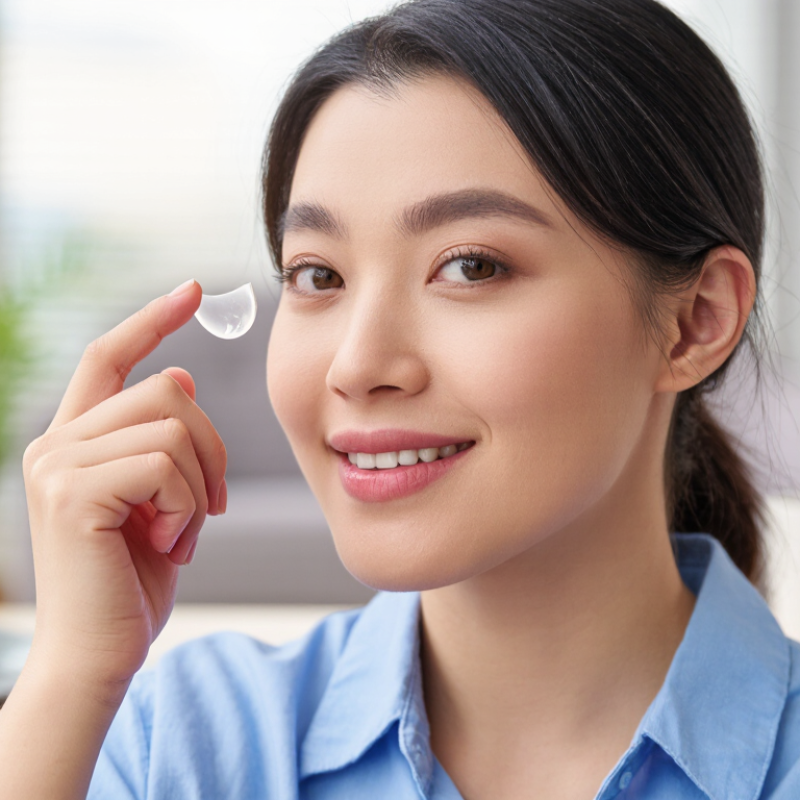
What All-Day Comfort Contact Lenses Are
Why Choose All Day Comfort Contact Lenses?
All-day comfort contact lenses are designed to remain wearable through work, travel, and ordinary screen use. They are not simply “soft lenses.” Their performance depends on water content, oxygen transmission, surface moisture, edge design, and movement across the cornea. A proper fit matters just as much. The U.S. Food and Drug Administration classifies contact lenses as medical devices, so professional fitting and a valid prescription remain essential.
The Centers for Disease Control and Prevention estimates that about 45 million people in the United States wear contact lenses. That number reflects daily demand, not guaranteed comfort. The TFOS DEWS II report identifies contact lens wear as a possible stressor for the ocular surface, especially when tear stability is poor. In practice, discomfort may feel like grit under the lens, fluctuating vision, or dryness after several hours. Some lenses help. None suit every eye.
Comfort-focused designs often use moisture-retaining materials and high oxygen delivery. However, “all day” is not a promise to ignore symptoms. A 2023 professional review in Contact Lens and Anterior Eye emphasized that comfort involves both lens properties and wearer behavior. Breaks from screens, clean hands, and correct replacement schedules can change the experience. I have found that people sometimes blame the lens too quickly. The real problem may be allergies, poor fit, or reduced blinking. Persistent redness, pain, or blurred vision needs prompt eye-care advice.
Why Choose All-Day Comfort Contact Lenses?
All-day comfort contact lenses are designed for daytime wear with features that support a stable, comfortable wearing experience. Replacement schedules vary by lens category.
The chart shows the nominal replacement interval commonly associated with daily disposable, two-week, and monthly replacement lenses. Always follow the product instructions and advice of an eye-care professional.
How Lens Materials and Design Affect Comfort
All-day comfort depends on more than a lens feeling soft when you first put it in. Materials affect how much oxygen reaches the cornea and how well a lens holds moisture. Silicone hydrogel lenses generally allow more oxygen through than many traditional hydrogel lenses, but that does not make them comfortable for everyone. A lens that feels fine at breakfast may feel dry in a heated office by late afternoon.
Water content is not a simple comfort score. Some lenses with high water content can draw moisture from the eye as they dry, while other designs may stay comfortable longer for certain wearers. It is a little counterintuitive. The right choice depends on your eyes, prescription, environment, and wearing schedule, so an eye-care professional’s fitting matters.
Design details also shape the feel. A thin, smooth edge may reduce awareness of the lens during blinking, while its thickness and stiffness can affect movement on the eye. Diameter and curvature need to match the eye’s shape; a poor fit may cause rubbing, shifting, or blurred vision. Small details matter. A lens can look clear on a fingertip yet still feel irritating after hours of screen use. Persistent redness, pain, or blurred vision is not something to push through—remove the lenses and seek professional advice.
Why Choose All Day Comfort Contact Lenses? - How Lens Materials and Design Affect Comfort
| Comfort factor |
Material or design detail |
How it may affect comfort |
What to keep in mind |
| Lens material |
Conventional hydrogel and silicone hydrogel are common soft-lens materials. |
Silicone hydrogel generally allows more oxygen to pass through the lens than conventional hydrogel, which can support corneal oxygen supply. |
Higher oxygen transmissibility does not guarantee a more comfortable feel; comfort also depends on fit, surface properties, and the wearer. |
| Water content |
Soft lenses differ in how much water they contain and how they retain moisture. |
Moisture-related properties can influence lens feel and interaction with the tear film during wear. |
A higher water-content number alone does not predict all-day comfort; material type and individual tear-film conditions matter too. |
| Surface wettability |
Lens surfaces are designed to interact with tears and maintain a smooth, wettable surface. |
A stable tear layer can help reduce sensations of dryness or friction for some wearers. |
Dryness can also be affected by the environment, screen use, medications, and eye health. |
| Lens edge and thickness |
Edge shape, lens thickness, and overall geometry vary by lens design and prescription. |
A well-designed, properly fitting lens may feel less noticeable and move appropriately with the eye. |
The best design depends on the eye’s shape and prescription; a clinician should assess lens fit. |
| Replacement schedule |
Daily disposable lenses are discarded after one use; reusable lenses require cleaning and disinfection as directed. |
Single-use lenses avoid lens-care steps, while correct care of reusable lenses helps remove deposits and maintain hygiene. |
Follow the prescribed replacement schedule. Do not reuse daily disposables or sleep in lenses unless specifically prescribed. |
| Prescription and fit |
Base curve, diameter, power, and lens movement are selected for the individual eye. |
An appropriate fit supports clear vision and comfortable lens movement; an unsuitable fit may cause irritation or blurred vision. |
Contact lenses are medical devices. Use only lenses prescribed and fitted by an eye-care professional. |
| Wear duration |
Approved wear time depends on the specific lens, wearing schedule, and professional instructions. |
Taking lenses out when advised gives the eyes a break and can help address discomfort before it worsens. |
Remove lenses and seek professional advice if persistent pain, redness, light sensitivity, or sudden blurred vision occurs. |
Comfort varies from person to person. A contact-lens professional can help determine which material, design, and wearing schedule are appropriate.
Key Benefits for Daily Wear
Why Choose All Day Comfort Contact Lenses?
Key Benefits for Daily Wear
Comfort matters during ordinary moments: morning commutes, computer work, and evening walks. The Tear Film and Ocular Surface Society reports that contact lens discomfort affects roughly 30–50% of wearers. That range is significant. It shows that comfort is not a minor preference. All day comfort lenses are designed to support moisture balance, stable vision, and consistent wear through changing environments. Breathable materials can help maintain oxygen flow to the cornea. However, comfort depends on fit, tear quality, screen time, and cleaning habits.
Daily replacement can also make wear simpler. The Centers for Disease Control and Prevention estimates that about 45 million people in the United States wear contact lenses. For these users, fresh lenses may reduce deposits that build up over time. They can also remove the need for long-term storage. The U.S. Food and Drug Administration advises users to follow the prescribed replacement schedule. One small detail matters: comfortable lenses still require clean hands and proper handling.
I would not treat “all day” as a promise for every eye. A dry office, dusty commute, or long video call can change the experience. Brief breaks may help. Remove lenses when pain, redness, unusual light sensitivity, or blurred vision appears, and seek professional advice. Comfort is useful, but it is not proof of eye health.
Who May Prefer All-Day Comfort Lenses
Why Choose All Day Comfort Contact Lenses?
Who May Prefer All-Day Comfort Lenses
People who wear lenses for eight or more hours may prefer all-day comfort lenses. Office workers often notice dryness after long screen sessions. Their eyes may blink less while reading emails or reviewing spreadsheets. Lenses that maintain moisture can feel more comfortable in air-conditioned rooms. However, comfort depends on the lens fit, material, and each person’s tear film.
Active users may also appreciate this option. A teacher may move between classrooms all day. A parent may wear lenses from an early commute through an evening event. Soft, stable lenses can reduce the awareness of a lens during busy routines. They should still be fitted by an eye-care professional. A prescription alone does not guarantee a suitable fit.
New wearers may prefer a gentler wearing experience, but expectations matter. No lens feels perfect for everyone. I once assumed comfort meant forgetting the lenses completely. That was too simple. Redness, pain, unusual watering, or blurred vision should never be ignored. Remove the lenses and seek professional advice if these symptoms continue. Users should also follow the recommended replacement schedule and avoid extending wear without clinical guidance.
How to Wear and Care for Them Safely
Why Choose All Day Comfort Contact Lenses?
All-day comfort begins with safe habits, not only lens design. Your eye-care professional should confirm the correct lens type, fit, and wearing schedule. Follow that schedule carefully, even when your eyes feel normal. Comfort can hide dryness or irritation. Wash and dry your hands before touching the lenses. Check each lens for tears, dust, or an uneven edge. A damaged lens belongs in the bin.
Never rinse lenses with tap water, saliva, or homemade solutions. These fluids can carry harmful microorganisms. Use only the recommended sterile solution, and replace it as directed. Store lenses in a clean case with fresh solution each time. Do not “top up” old liquid. Replace the case regularly, too. It is easy to forget this small step.
Tips: Apply makeup after inserting lenses, and remove lenses before cleansing your face. Avoid sleeping or swimming in them unless a qualified professional specifically approves it. Keep backup glasses nearby. If your eyes become painful, unusually red, light-sensitive, or blurry, remove the lenses and seek prompt professional advice. I would rather waste one lens than risk an eye problem. Even careful routines can slip, especially on rushed mornings. Set a simple reminder, and treat discomfort as useful information, not something to ignore.
Conclusion
All Day Comfort Contact Lens options are designed to help keep eyes feeling comfortable throughout a typical day of wear. Their comfort can depend on the lens material, moisture retention, oxygen flow, fit, and surface design. Together, these features may help reduce dryness and irritation while supporting clear, consistent vision during everyday activities.
They may suit people who wear contacts for work, study, or other daily routines, though comfort varies from person to person and a professional fitting is important. For safe wear, follow the prescribed wearing schedule, wash and dry hands before handling lenses, and use the recommended cleaning and storage routine. Never wear lenses longer than advised, and seek professional guidance if persistent discomfort, redness, or blurred vision occurs.
